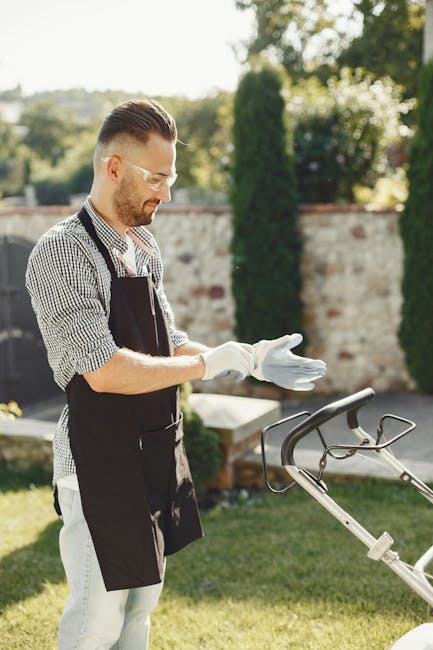
DIY vs professional gardening what to tackle yourself
Some garden jobs are oddly satisfying. You grab the gloves, hear the snip of secateurs, and a messy corner suddenly looks cared for again. Other jobs, though? They start small and then become a whole Saturday, a sore back, and a bit of regret. That is exactly why DIY vs professional gardening what to tackle yourself matters.
The real question is not whether you can do everything yourself. It is whether you should. In a modest courtyard, a family garden, or a larger patch with hedges, trees, and tired paving, the right answer changes depending on risk, time, tools, and the finish you want. This guide breaks it down clearly so you can decide what is worth tackling personally and what is better left to a professional. No fluff. Just sensible, real-world guidance.
Table of Contents
- Why DIY vs professional gardening what to tackle yourself Matters
- How DIY vs professional gardening what to tackle yourself Works
- Key Benefits and Practical Advantages
- Who This Is For and When It Makes Sense
- Step-by-Step Guidance
- Expert Tips for Better Results
- Common Mistakes to Avoid
- Tools, Resources and Recommendations
- Law, Compliance, Standards, or Best Practice
- Options, Methods, or Comparison Table
- Case Study or Real-World Example
- Practical Checklist
- Conclusion
- Frequently Asked Questions
Why DIY vs professional gardening what to tackle yourself Matters
Most garden owners do a bit of both, even if they do not call it that. You mow the lawn, deadhead flowers, and sweep up the patio. Then a hedge gets leggy, a border gets overrun, or a tree starts leaning after a windy week and suddenly the job becomes less about enthusiasm and more about judgement.
That judgement matters because gardening is not just about appearance. It affects safety, plant health, drainage, waste handling, time, and long-term cost. A rushed DIY job can look fine for a few days and then unravel. A professional job can feel expensive at first, but the finish is often cleaner, faster, and safer. To be fair, that is usually the difference people notice most in the end.
There is also the hidden cost of tools. A decent mower, hedge trimmer, pruning saw, lawn edging tool, or pressure washer all add up. If you only need them once or twice a year, buying them may make less sense than hiring help. On the other hand, routine jobs like mowing or light weeding may be far more economical to do yourself.
So the point is not DIY versus professional in the abstract. It is choosing the right level of effort for the right task. Get that balance wrong and you either waste money or risk damage. Get it right and the garden feels easier to maintain all year round.
How DIY vs professional gardening what to tackle yourself Works
The simplest way to approach the decision is to split garden jobs into three categories: safe DIY, cautious DIY, and professional-only tasks.
1. Safe DIY tasks
These are the jobs many homeowners can manage with basic equipment and a bit of care. Think mowing, light weeding, deadheading, watering, sweeping leaves, potting plants, edging small borders, and cutting back soft growth. These jobs tend to be repetitive rather than technical, which makes them ideal for regular upkeep.
2. Cautious DIY tasks
These jobs are possible yourself, but only if the scale is modest and the risks are under control. Light hedge trimming is a good example. So is pruning small shrubs or clearing a compact bed that has become a bit wild. You still need the right tools and a clear plan, because one bad cut can set a plant back for months. A little caution goes a long way here.
3. Professional-only tasks
Anything involving height, heavy lifting, embedded roots, large volumes of waste, structural work, or unknown risks is often better handled by a professional. That includes major hedge reductions, tree lopping, stump removal, garden clearance after long neglect, landscaping, and building features such as decking or retaining areas. If it could damage property or cause injury, it is usually in the wrong bucket for a casual weekend project.
Professional gardeners also bring planning and sequencing. They know when to prune, when to leave well alone, how to manage waste responsibly, and how to avoid repeat problems. It is not just muscle. It is method.
Key Benefits and Practical Advantages
The best way to think about the DIY route is control. The best way to think about the professional route is certainty. Each has a role, and the strongest gardens usually use both.
- DIY gives you control over frequency. You can mow, deadhead, and tidy as often as you want, rather than waiting for an appointment.
- DIY can save money on routine work. If you already own the tools and the job is straightforward, the cost is mainly your time.
- Professionals save time on bigger jobs. A task that might take you two days can often be handled much faster with the right team and equipment.
- Professionals reduce risk. That matters for ladders, heavy branches, awkward waste, and jobs near fences, sheds, glass, or power lines.
- Professionals often deliver a neater finish. This is especially true for hedges, clearance, garden reshaping, and larger maintenance work.
- Professionals help prevent avoidable damage. Over-pruning, scalping a lawn, or cutting a hedge at the wrong time can be costly to fix.
A practical bonus is momentum. Once a professional clears the heavy work, the ongoing upkeep becomes much easier for you to manage. That is why services like garden maintenance often pair well with lighter DIY routines at home.
Expert summary: Do the repeatable, low-risk jobs yourself. Bring in professionals for height, heavy waste, specialist pruning, structural work, and anything that could become messy fast. That balance usually gives the best overall value.
Who This Is For and When It Makes Sense
This approach suits a wide range of people, but the reasons vary. A first-time homeowner may want to keep costs down while learning what grows where. A busy family may want to handle weekly jobs in-house and outsource the seasonal heavy lifting. An older homeowner may simply want to stay safe and avoid physically demanding work.
It also makes sense if your garden has mixed needs. Maybe the lawn is easy enough to manage, but the back hedge has grown out of reach and the side access is awkward. Or the planting is manageable, but you need help with a complete reset after a winter of neglect. In those cases, a hybrid approach is usually the smart one.
There are also emotional reasons. Let's face it, many people enjoy the calm of a small gardening job on a Saturday morning. You get fresh air, a bit of movement, and the very satisfying sight of a border coming back to life. But not everyone wants to spend half the weekend wrestling a tangled shrub. Fair enough.
In our experience, the people who get the most value from a professional gardener are those who are honest about their limits. Not every job needs to be a personal challenge. Some things are just easier, cleaner, and safer when handed over.
Step-by-Step Guidance
If you are unsure where to begin, use this practical decision process. It keeps things simple and stops you from overcommitting to a job that should have stayed on the professional list.
- Walk the garden slowly. Look at each area and ask what is untidy, what is overgrown, and what feels unsafe or awkward.
- Split jobs by risk. Anything involving ladders, large branches, deep roots, or hard-to-move waste goes straight into the professional category.
- Check the size of the task. A small hedge or border can be DIY. A long boundary hedge or a neglected tree canopy is a different story.
- Think about timing. Some pruning and cutting jobs depend on the season. If you are unsure, err on the side of caution rather than making a bold cut at the wrong time.
- Review your tools. If you need to buy or borrow multiple specialist tools, the job may no longer be worth doing yourself.
- Consider disposal. Green waste looks harmless until it starts filling bags, bins, and the boot of your car. Clearance can become the real headache.
- Decide what success looks like. If you want a tidy refresh, DIY may be fine. If you want a level, polished, professionally shaped result, bring in help.
- Book the right support where needed. For bigger clear-outs, garden clearance can remove the backlog and reset the space properly.
A good rule: if the job will leave you tired before you have even started the next one, it may be the wrong DIY job. That sounds obvious, but people ignore it all the time.
What most homeowners can tackle themselves
- Lawn mowing on manageable, level ground
- Weeding and light border tidying
- Deadheading and seasonal plant cleanup
- Watering, feeding, and mulching
- Minor pruning of soft growth and small shrubs
- Leaf collection and light sweeping
What usually needs a professional
- Large hedge reductions or tall hedge trimming
- Tree work, especially above shoulder height
- Heavy garden clearance
- Reshaping neglected gardens
- Decking installation or repair
- Landscaping and layout changes
For a lot of households, a simple split works best: keep the ongoing lawn care and basic tidying in-house, then use professional help for hedges, bigger clearance, and structural improvements. Services such as lawn mowing and hedge trimming fit neatly into that kind of plan.
Expert Tips for Better Results
There are a few habits that make a huge difference, and most of them are more about discipline than equipment.
- Start with the easiest visible win. A clear path or a freshly cut lawn changes how the whole garden feels.
- Work from top to bottom. If you trim first and clear later, you may end up repeating work.
- Do less, but do it properly. A neat small job is better than a rushed large one. Always.
- Keep blades sharp and tools clean. Ragged cuts can stress plants and make jobs harder than they need to be.
- Use the weather sensibly. Dry days are easier for mowing and clearing; damp conditions can make everything messier and more tiring.
- Leave room for growth. Over-cutting hedges and shrubs often creates more problems than it solves.
A small but useful tip: if you are hesitant about a plant, take a photo before cutting it. It sounds almost too simple, but it helps you compare before and after and stop the "I thought it was fine" moment later on.
Also, keep an eye on the finish around edges. A lot of gardens look unfinished not because the planting is wrong, but because the borders, edging, and transitions are messy. Those tiny details matter more than people think.
Common Mistakes to Avoid
The most common mistake is overestimating what can be done in a free afternoon. Gardening has a habit of looking quick from the kitchen window and then swallowing time once you are actually outside in the cold with a bin bag and a rake.
- Taking on ladder work casually. Height changes the risk profile very quickly.
- Cutting too much at once. A hedge or shrub may not recover well if you remove too much growth.
- Ignoring waste volume. A "small tidy-up" often becomes several heavy bags.
- Using the wrong tools. A blunt saw or cheap trimmer can make a simple job awkward and unsafe.
- Doing structural work without the right knowledge. Decking, slopes, drainage, and retaining areas need proper planning.
- Waiting too long to ask for help. By the time a garden is overrun, the fix is usually more expensive than it needed to be.
One quieter mistake is not factoring in your own energy. Not just fitness, but patience. A job that seems manageable after breakfast can feel very different by late afternoon. That is not weakness. That is being honest.
Tools, Resources and Recommendations
You do not need a van full of kit to keep a garden in shape, but a few well-chosen tools make DIY gardening far more realistic.
Useful DIY tools
- Lawns: mower, edging shears, rake
- Borders: hand fork, trowel, secateurs, gloves
- Leaf and waste jobs: sturdy garden bags, rake, wheelbarrow
- Light pruning: bypass secateurs, small pruning saw
- Cleaning jobs: broom, stiff brush, bucket
When professional equipment matters
Once you move into taller hedges, heavy waste, awkward access, or larger redesigns, the equipment gap becomes obvious. Professionals can work more safely and efficiently because they have the right kit for the job, not just the nearest thing in the shed.
That matters especially for broader property improvements too. If your project is moving beyond maintenance and into layout changes, a team experienced in landscape gardening or landscaping can help you avoid expensive false starts.
A sensible home-garden setup
For many households, the best setup is simple: own the basic maintenance tools, keep them in decent condition, and outsource the jobs that need specialist gear. That gives you flexibility without turning the shed into a mini depot. Which, to be fair, happens quickly if you let it.
Law, Compliance, Standards, or Best Practice
For most garden owners, the main compliance issues are less about paperwork and more about safety, waste, and neighbourly care. Still, there are some sensible UK best practices to keep in mind.
Tree work and larger pruning jobs should be treated carefully. If a tree is near a boundary, could fall, or is showing signs of instability, it is prudent to use qualified help rather than guessing. Similarly, major work around fences, driveways, drainage, or shared boundaries should be approached with care and clear communication.
Waste handling matters too. Green waste should be disposed of responsibly, and bulky clearance can create more trouble than expected if you do not plan for it. Reputable providers usually work with disposal and recycling in mind, which is one reason some homeowners prefer professional help for larger jobs. If sustainability matters to you, it is worth looking at recycling and sustainability practices before booking any bigger work.
Safety should also come first. Ladders, cutting tools, sharp debris, and uneven ground are a bad mix when you are tired or rushing. For peace of mind, it helps to check a provider's health and safety policy and insurance and safety information before assigning more involved tasks.
In short: if a job creates uncertainty about safety, boundaries, disposal, or responsibility, that is usually your sign to step back and get proper help.
Options, Methods, or Comparison Table
Here is a straightforward comparison to help you decide what to do yourself and what to outsource.
| Task type | DIY suitability | Professional value | Best for |
|---|---|---|---|
| Lawn mowing | High | Medium if large or uneven | Routine upkeep, regular finishes |
| Weeding and tidying | High | Low to medium | Ongoing maintenance between visits |
| Light hedge trimming | Medium | High for taller or longer hedges | Clean shaping, safer height work |
| Tree pruning or removal | Low | High | Safety, control, proper handling |
| Garden clearance | Low to medium | High | Neglected spaces, bulky waste, time-saving |
| Decking and hard landscaping | Low | High | Structural quality, accurate finish |
The key is not to read the table as a hard rulebook. It is a guide. A confident DIY gardener with the right tools and a tiny plot may comfortably do more than someone with a much larger garden but little time. Context always wins.
Case Study or Real-World Example
Imagine a typical semi-detached garden after a busy season. The lawn is patchy but manageable. A hedge at the back has shot up. One bed is full of fallen leaves, old stems, and a few stubborn weeds. There is also a narrow side return where access is awkward, and a small paved area that has gone green and slippery.
A sensible split would look like this:
- The homeowner mows the lawn, clears the leaves, and tidies the beds.
- A professional trims the hedge properly, because it is too tall for safe DIY work.
- The side return and paved section are cleaned as part of a broader maintenance visit.
- Any deeper reshaping is left for later, once the basics are under control.
That kind of mixed approach is common because it keeps costs reasonable without sacrificing safety or finish. You get momentum, and the garden stops feeling like a burden. Truth be told, that is often the real victory.
In bigger transformations, the same logic applies. Routine care can remain DIY, while more involved updates can be handled by professionals through services such as garden maintenance or more design-led work through landscape gardening.
Practical Checklist
Use this checklist before you decide to do a job yourself.
- Is the task at ground level and low risk?
- Do I already have the right tools?
- Can I finish it without rushing?
- Will the waste be easy to handle?
- Could the job damage plants, structures, or surfaces if I get it wrong?
- Do I know the right timing for this type of cut or clearance?
- Will I need a ladder, heavy lifting, or specialist access?
- Would paying for help be cheaper than buying tools I may barely use?
- Do I want a neat result, or just a tidy one?
- Would a professional save me time, strain, or repeat work?
If you answered "yes" to the safety or complexity questions, that is usually a signal to hand it over. If the job is simple, repetitive, and low risk, DIY is probably fine.
For homeowners who want support with the heavier jobs, it can be useful to speak to a trusted team via contact us or review pricing and quotes before making a decision.
Conclusion
The smartest approach to DIY vs professional gardening what to tackle yourself is not choosing one side and sticking to it forever. It is building a realistic split that suits your garden, your time, and your confidence. Do the easy, repeatable jobs yourself. Call in professionals for the heavy, tall, technical, or time-consuming work. That balance keeps the garden looking cared for without turning it into a never-ending chore.
When you get that balance right, the whole space becomes easier to live with. Less stress, fewer headaches, better results. And honestly, that is what most people want from a garden anyway.
Get a free quote today and see how much you can save.
If you are comparing options or want to understand the team behind the service, take a look at about us. It is often the simplest way to feel confident before handing over the big jobs.
Frequently Asked Questions
What gardening jobs are easiest to do yourself?
Lawn mowing, weeding, deadheading, watering, leaf collection, and light border tidying are usually the easiest DIY jobs. They are low risk, repeatable, and do not normally require specialist equipment.
When should I hire a professional gardener instead of DIY?
If the job involves height, heavy waste, large shrubs, trees, awkward access, or structural changes, a professional is usually the better choice. It is also the safer option when you are unsure how to cut or clear something properly.
Is hedge trimming a DIY job?
Small, reachable hedges may be manageable yourself. Taller, longer, or heavily overgrown hedges are better handled professionally because the risk and the chance of a poor finish increase quickly.
Can I save money by doing garden maintenance myself?
Yes, for routine tasks you often can. But the saving only holds if you already have the tools and the job stays simple. If you need to buy lots of equipment or redo mistakes, the savings can disappear fast.
What garden work is too dangerous for DIY?
Tree work, major branch cutting, ladder work, and any task involving unstable ground or hidden hazards should be treated as professional work. If you have even a small doubt, that is worth listening to.
How often should I do basic garden upkeep?
It depends on the season and the size of the garden, but small regular sessions are usually better than occasional marathons. A little and often approach keeps things manageable and reduces bigger jobs later.
Do professionals only do big jobs?
No. Many homeowners use professionals for both one-off clearances and regular maintenance. Sometimes the best use of a gardener is simply taking the pressure off the tasks that always get pushed to the weekend.
What should I prepare before a gardener arrives?
Clear access where possible, move fragile items, and note any areas of concern such as slippery paving, broken fences, or plants you want to keep. A quick conversation before the work starts usually helps a lot.
What if my garden has become badly overgrown?
Start with a proper clearance or reset rather than trying to nibble away at it all yourself. A professional garden clearance can make the space manageable again, which makes ongoing DIY much easier after that.
Are professional gardening services worth it for small gardens?
Often, yes. Small gardens still need time and care, and sometimes the awkwardness of access makes them more fiddly than larger spaces. A professional can usually finish the job quickly and neatly.
Can I mix DIY gardening with professional help?
Absolutely, and that is often the best model. Keep the routine tasks for yourself, then bring in a professional for the jobs that are too big, too high, or too technically demanding.
How do I know if a job is beyond my skill level?
If you are unsure about the cut, the tools, the waste, or the safety implications, that is a strong sign the job may be beyond DIY. A job does not need to be dramatic to be better left to someone with the right experience.